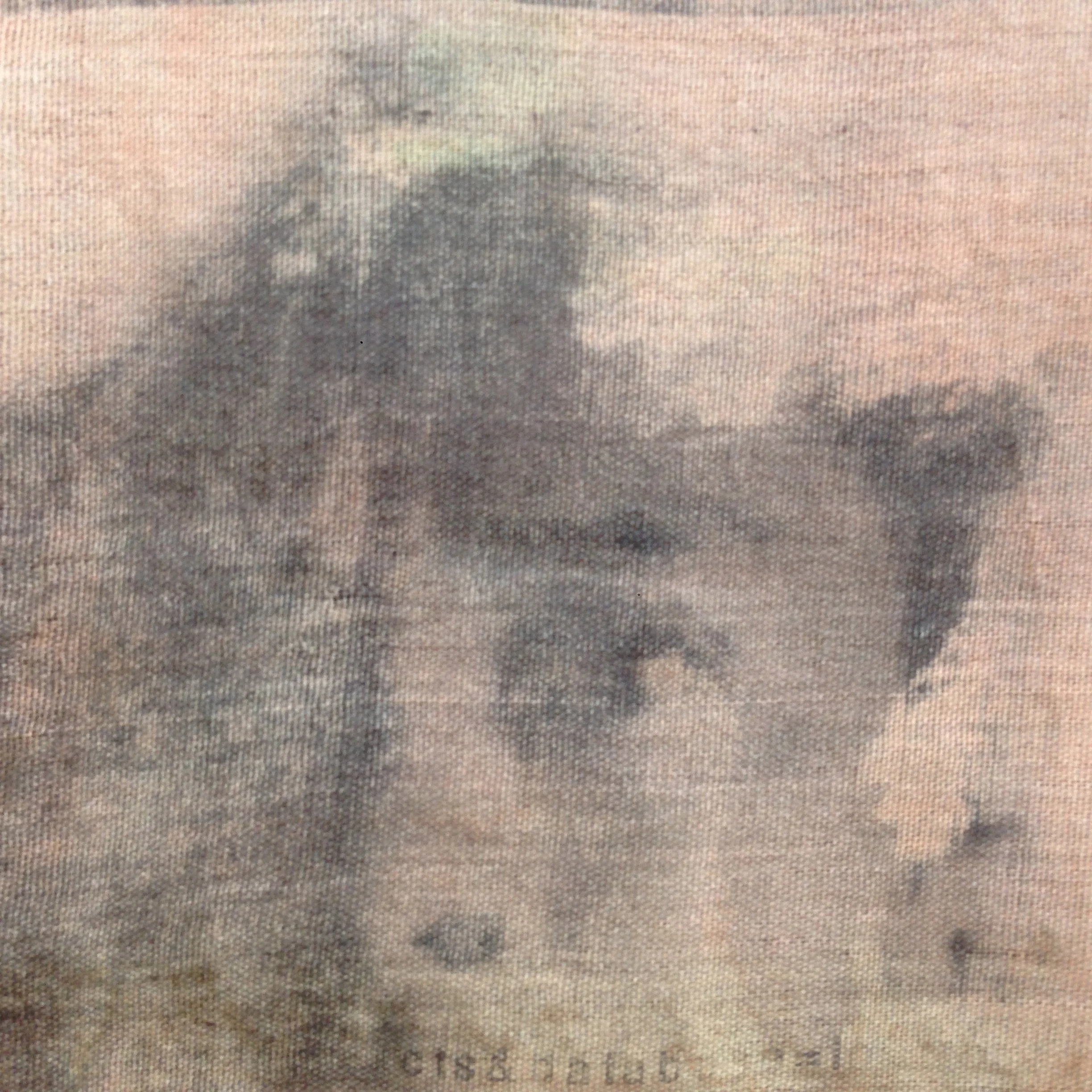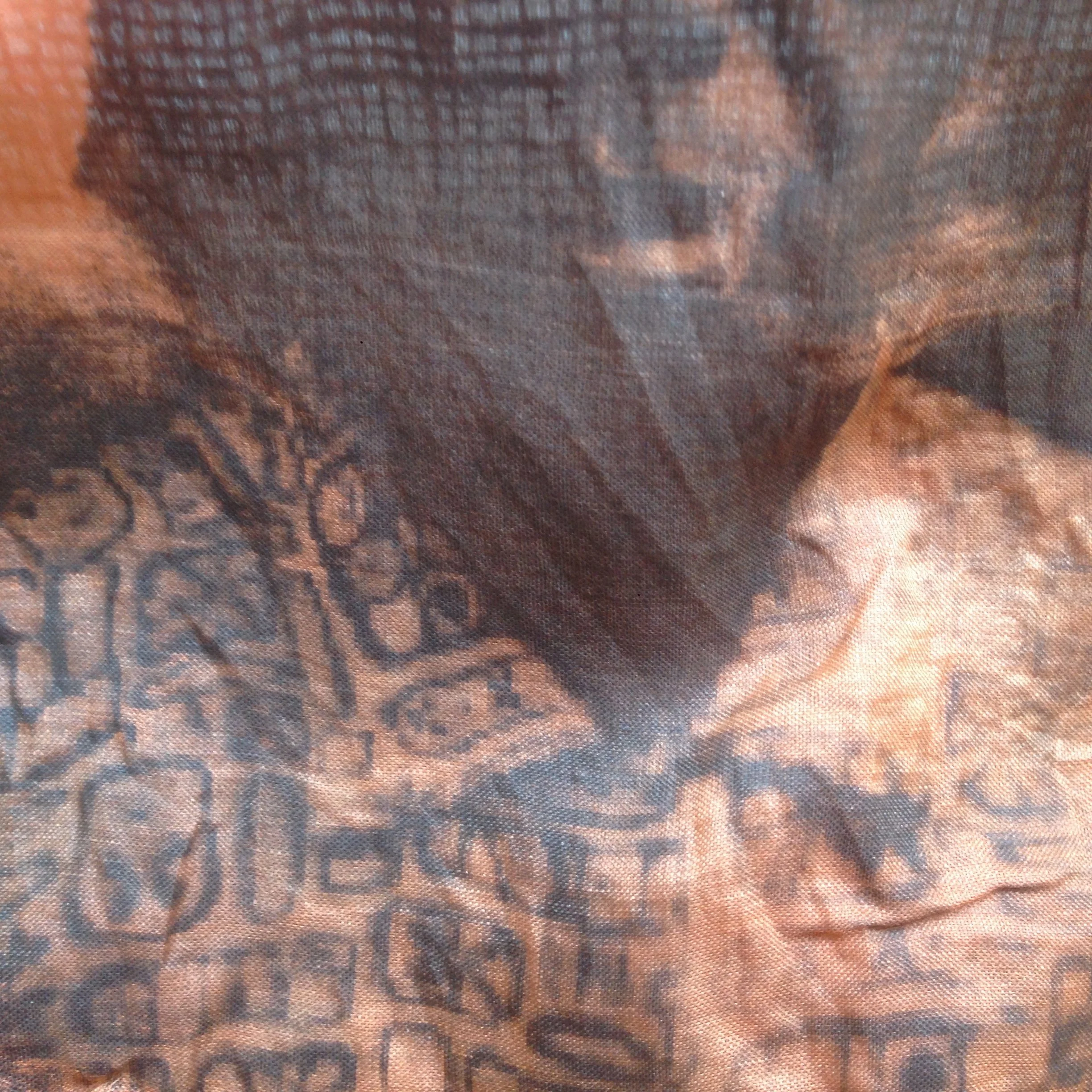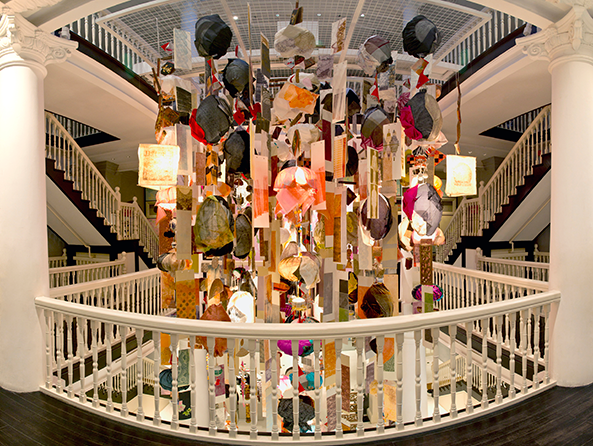
Setting Off
Singapore Biennale, 2016–17
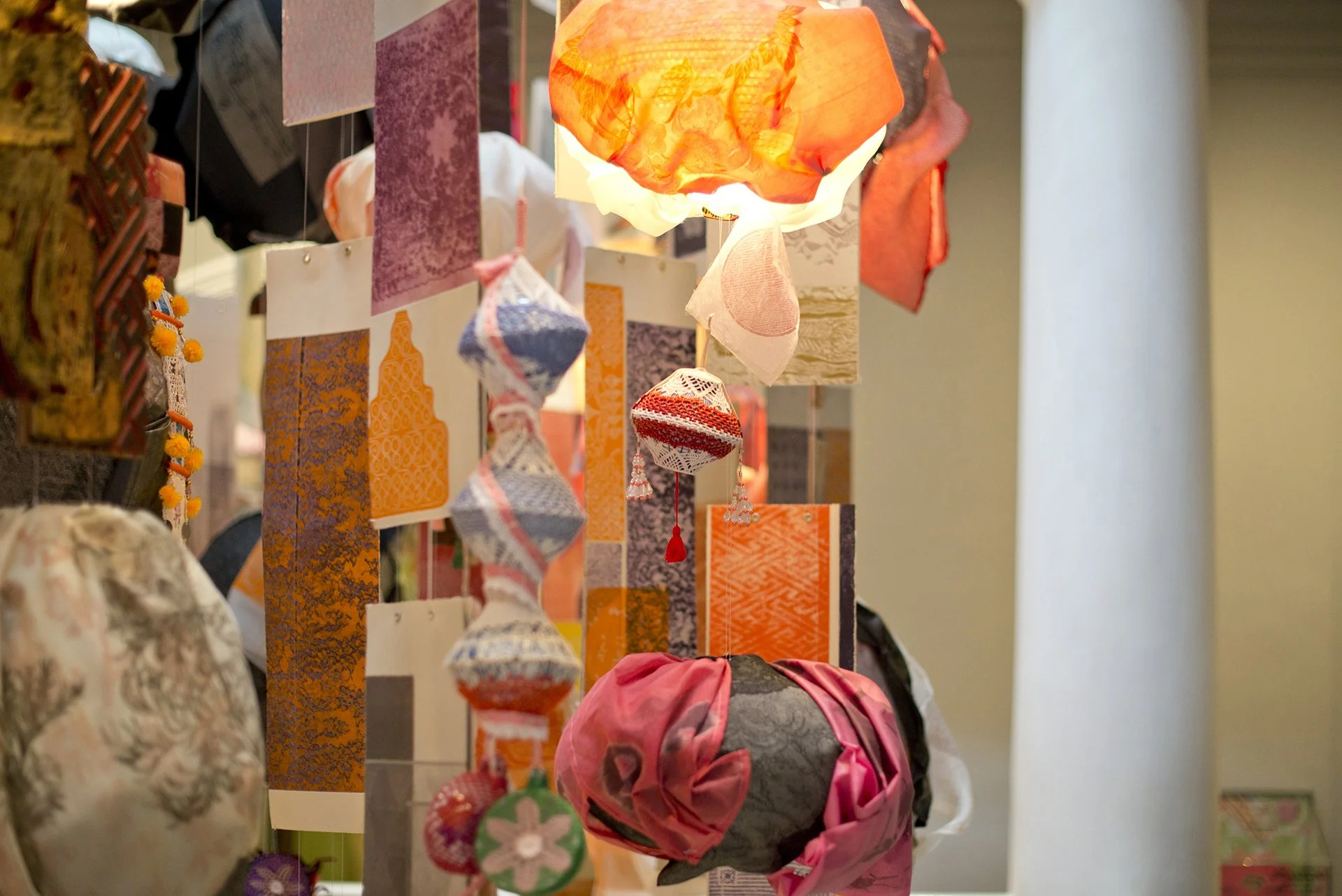
The suspended elements unfold in a spiral through the atrium, almost like a cascade.
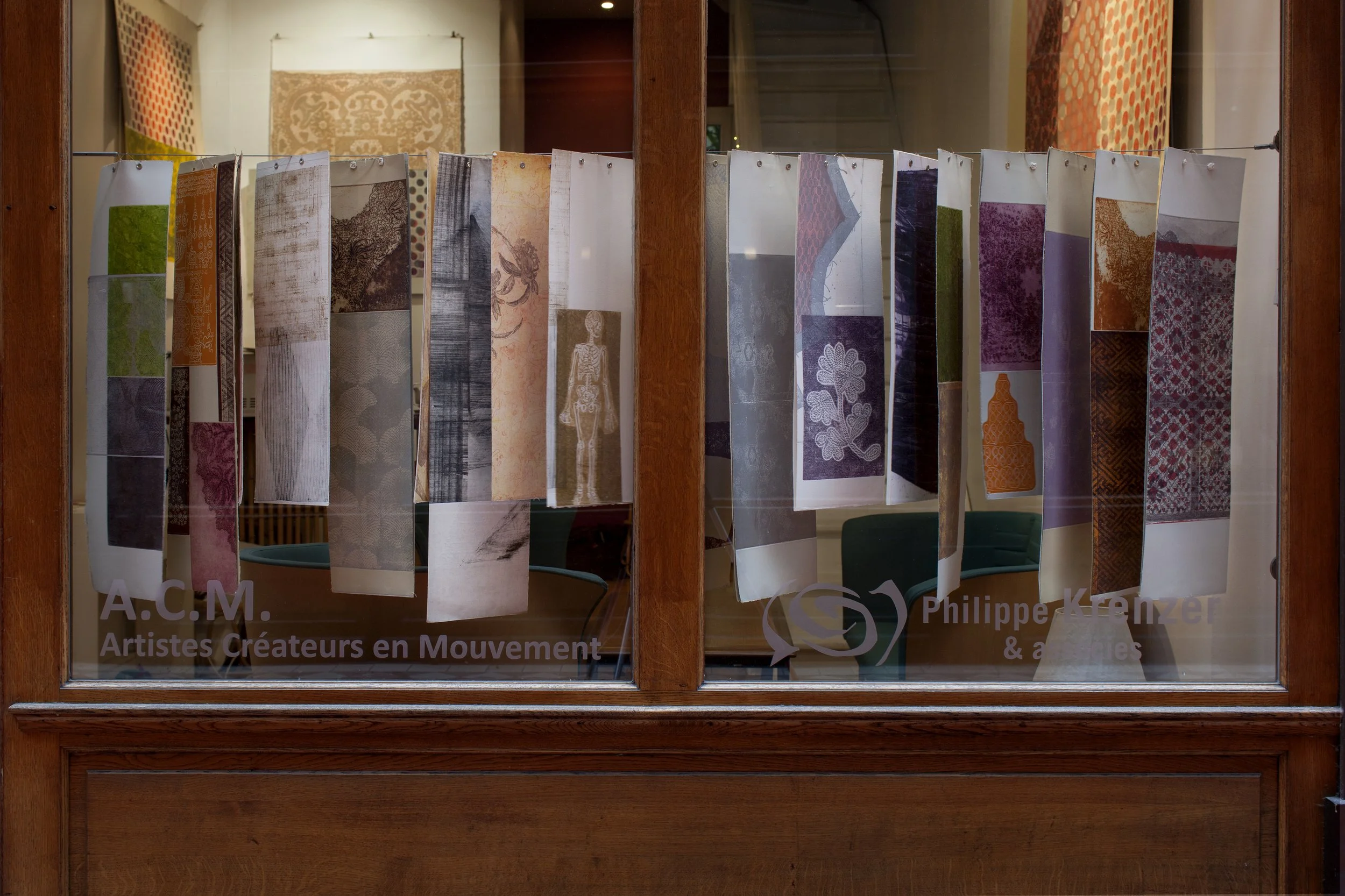
Panitam, Paris
Passage du Grand-Cerf, 2019
The strips take the form of vertical blinds, seen from both inside and outside.
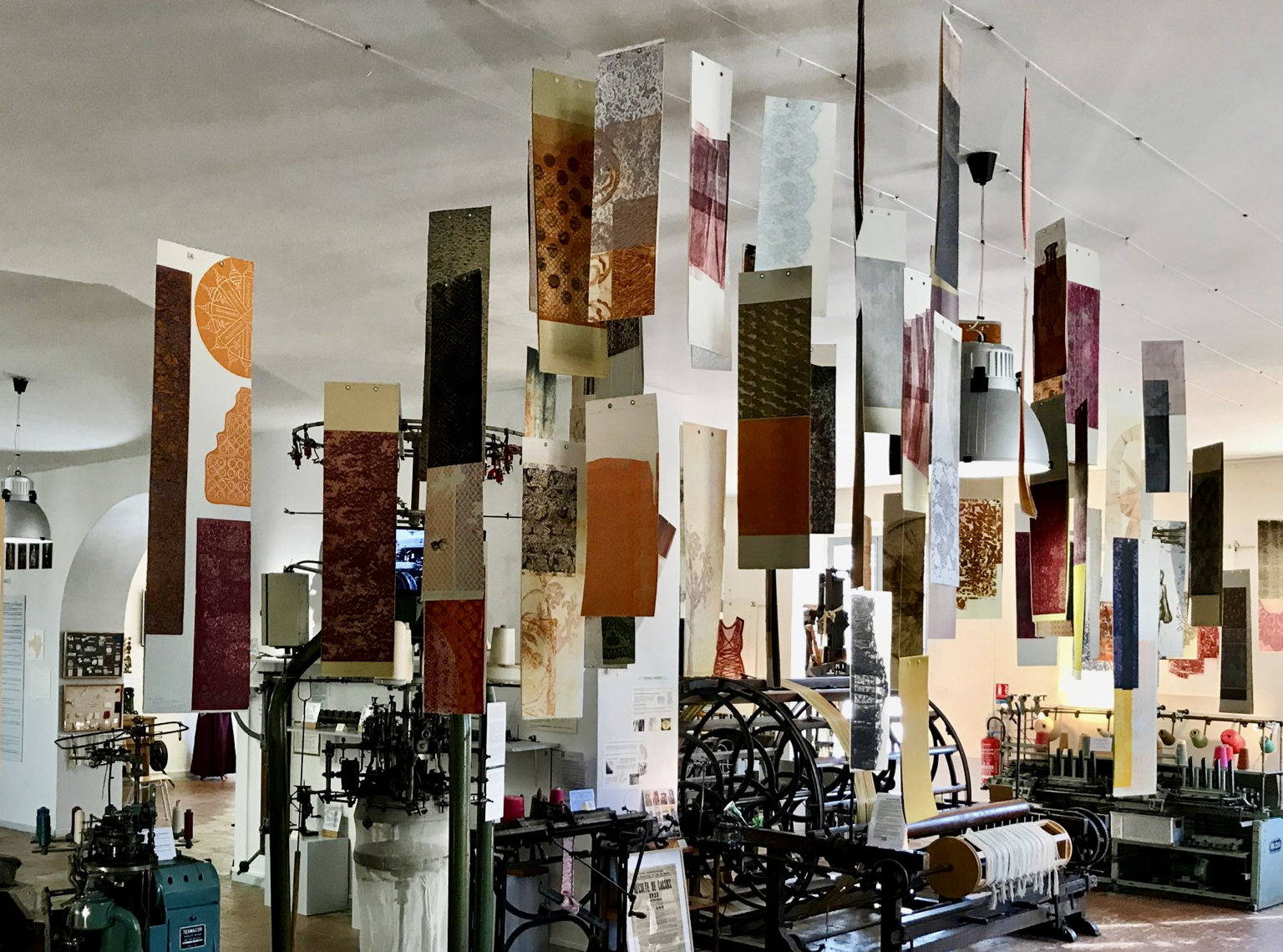
Panitam, Musée de la Soie
Saint-Hippolyte-du-Fort, 2024
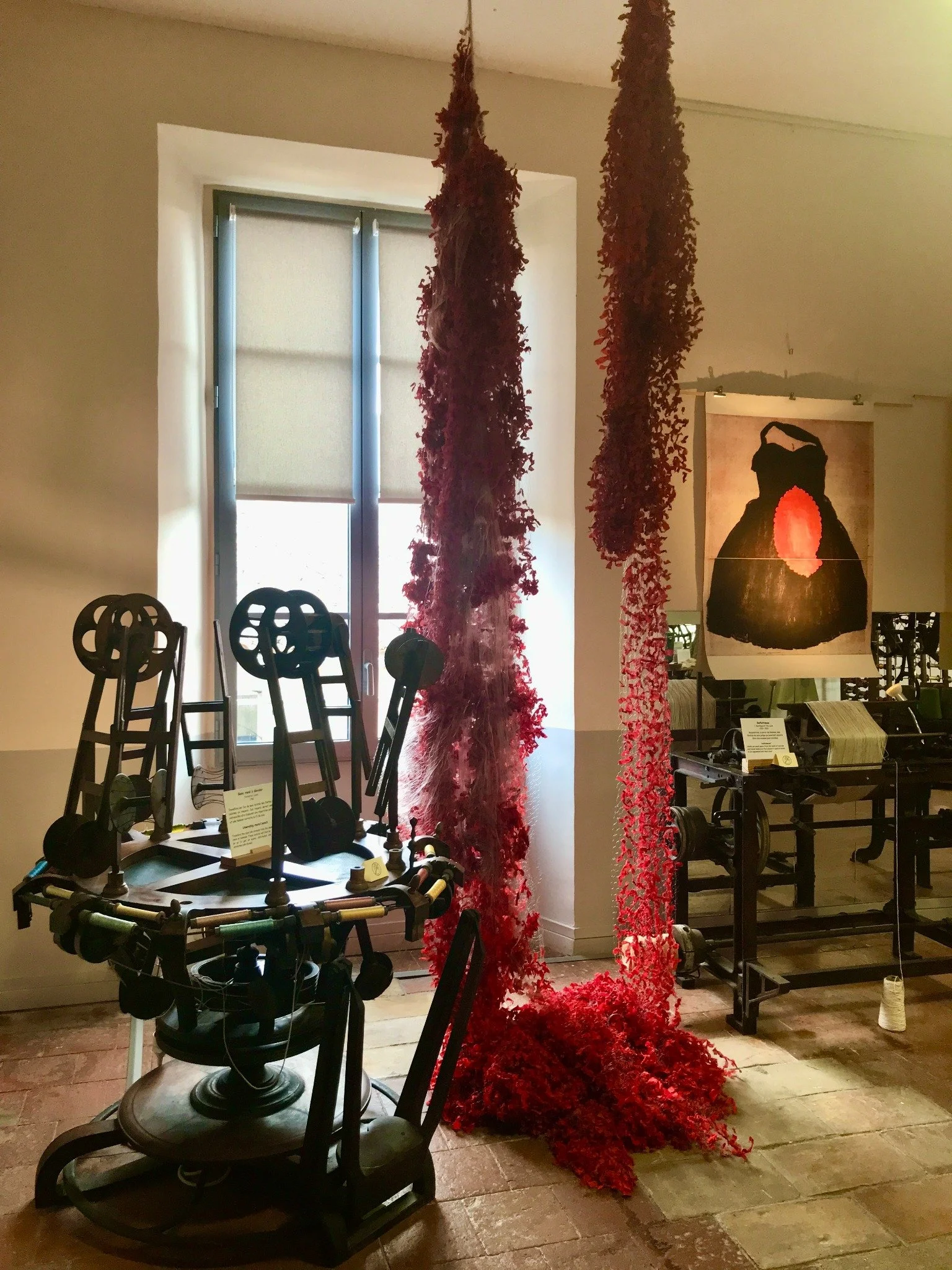
The arrangement responds to the machines and materials of the silk museum.
Occasionally, I return to an older etching, printing another time in my work onto what is already there. An Australian bush landscape may meet a later impression. In a few pieces, I have also added small, intricate hand-embroidered motifs.
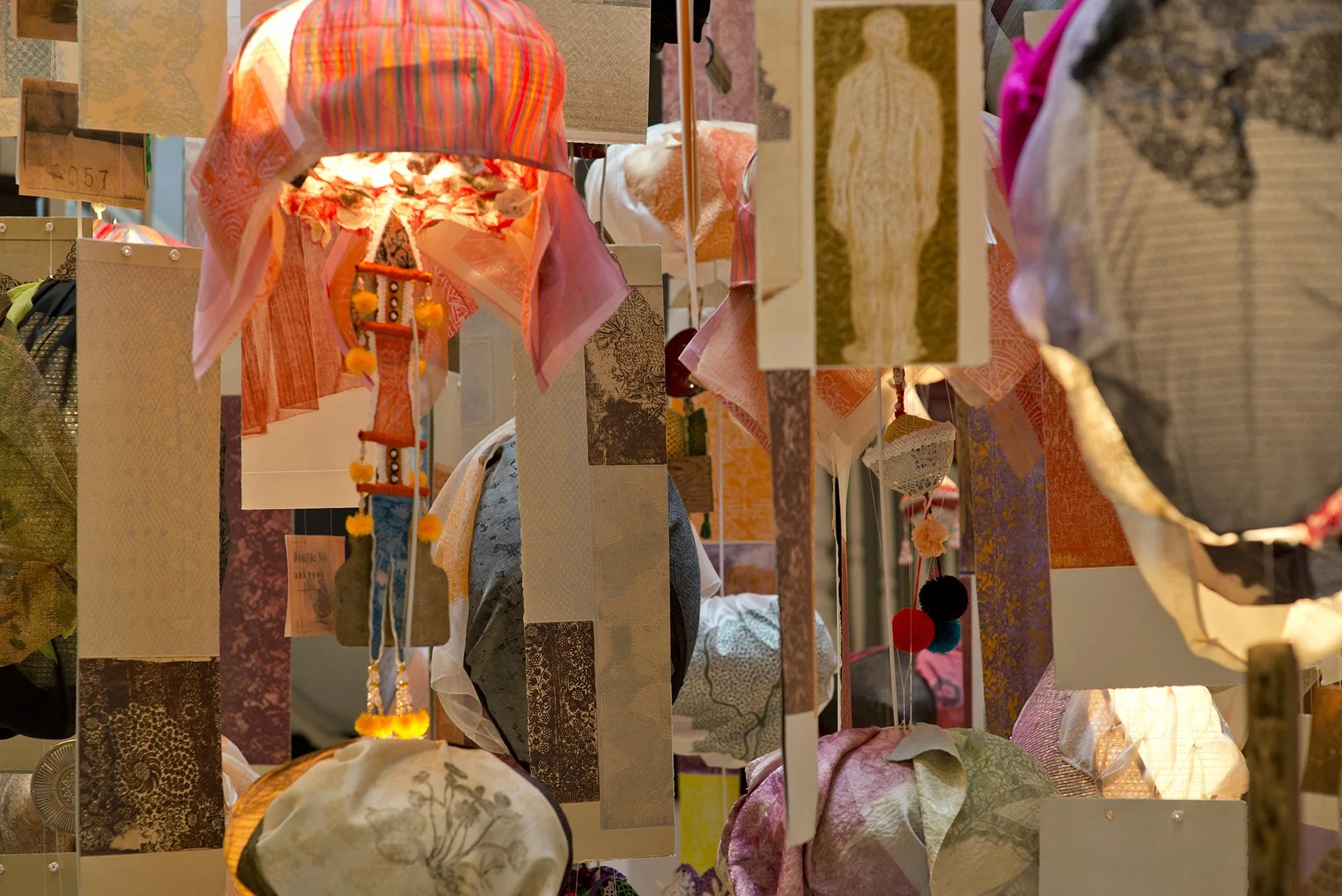
I join two strips back to back to give each suspended element two printed faces. I choose their sequence and partly shape the horizontal groupings of colour and pattern. Slight movements bring fragments into view, let others recede, or offer a glimpse from the side. A little of the composition remains open.
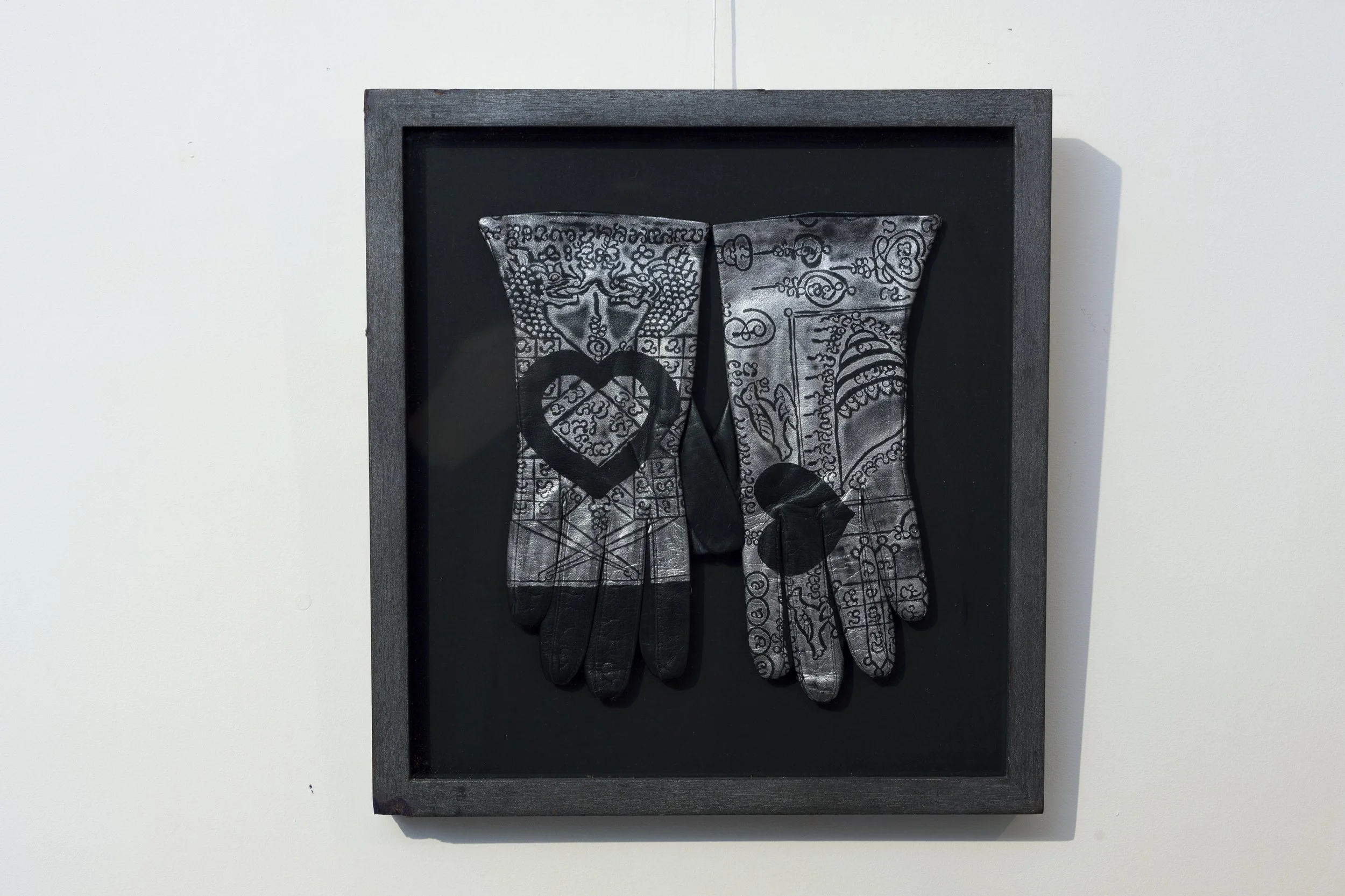
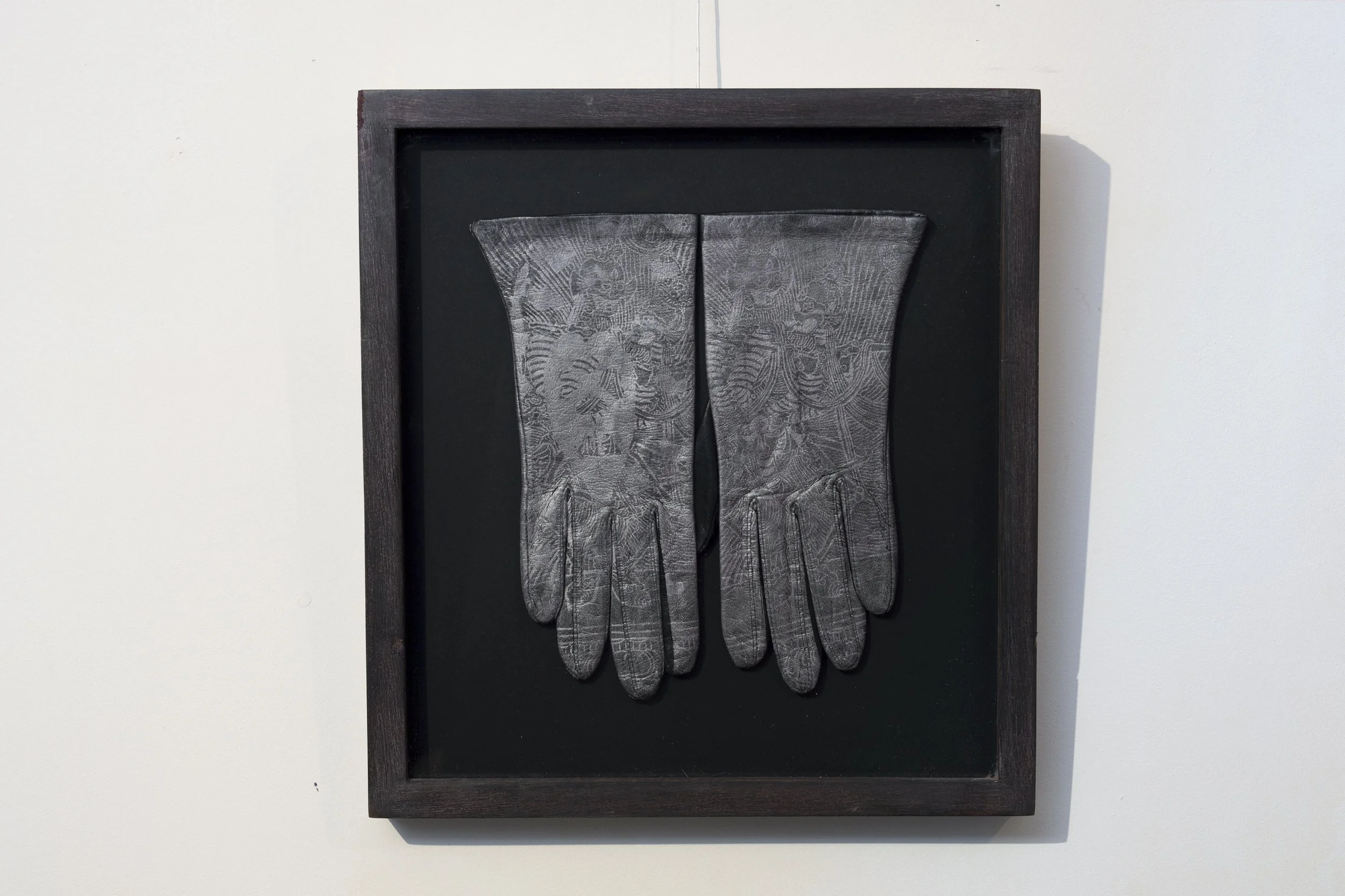
Jotana Series
-
![Marine Ky Art – Jotana 01]()
Jotana 01
-
![Marine Ky Art – Jotana 01]()
Jotana 02
-
![Marine Ky Art – Jotana 03]()
Jotana 03
-
![Marine Ky Art – Jotana 04]()
Jotana 04
-
![Marine Ky Art – Jotana 05]()
Jotana 05

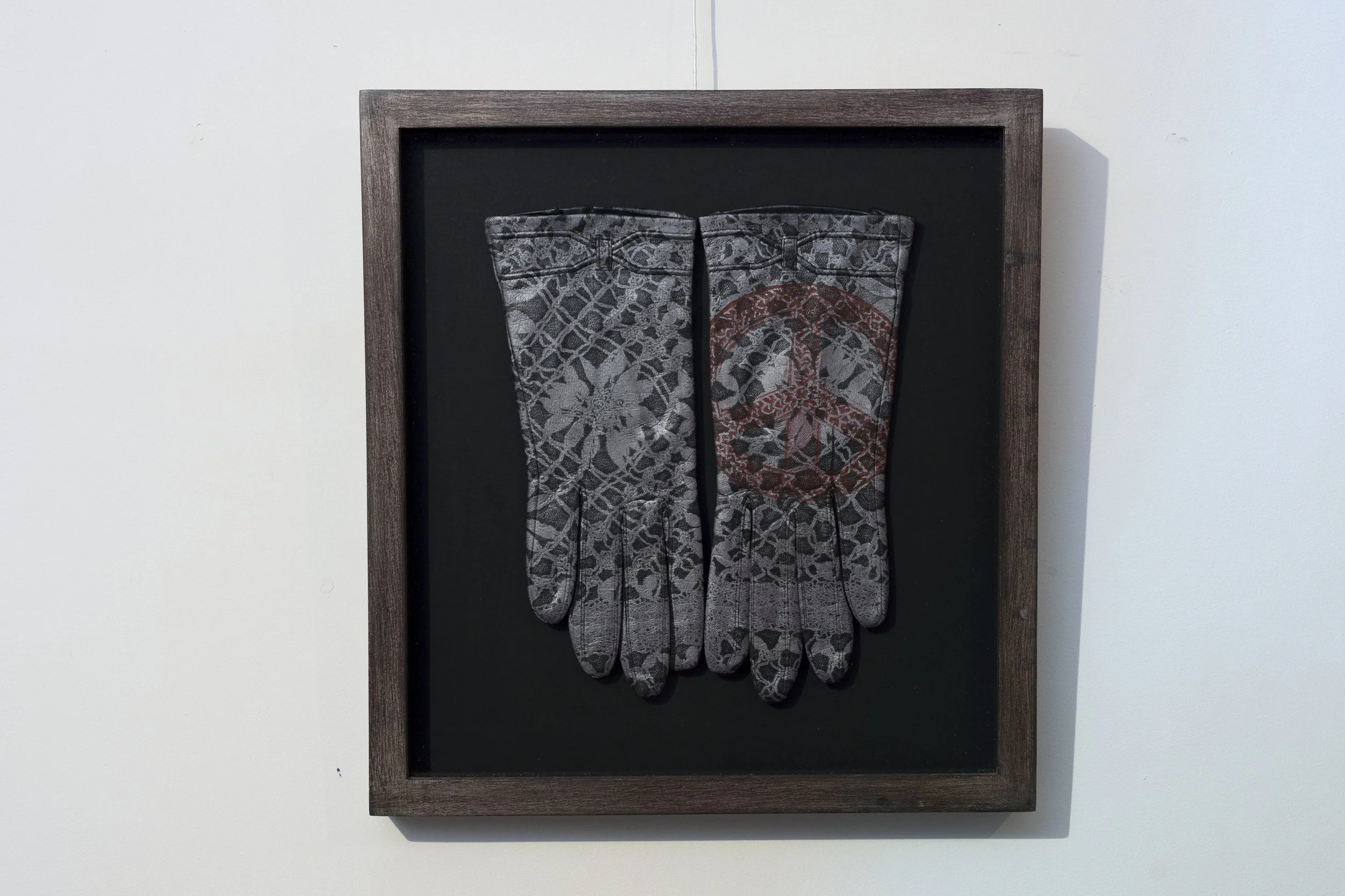
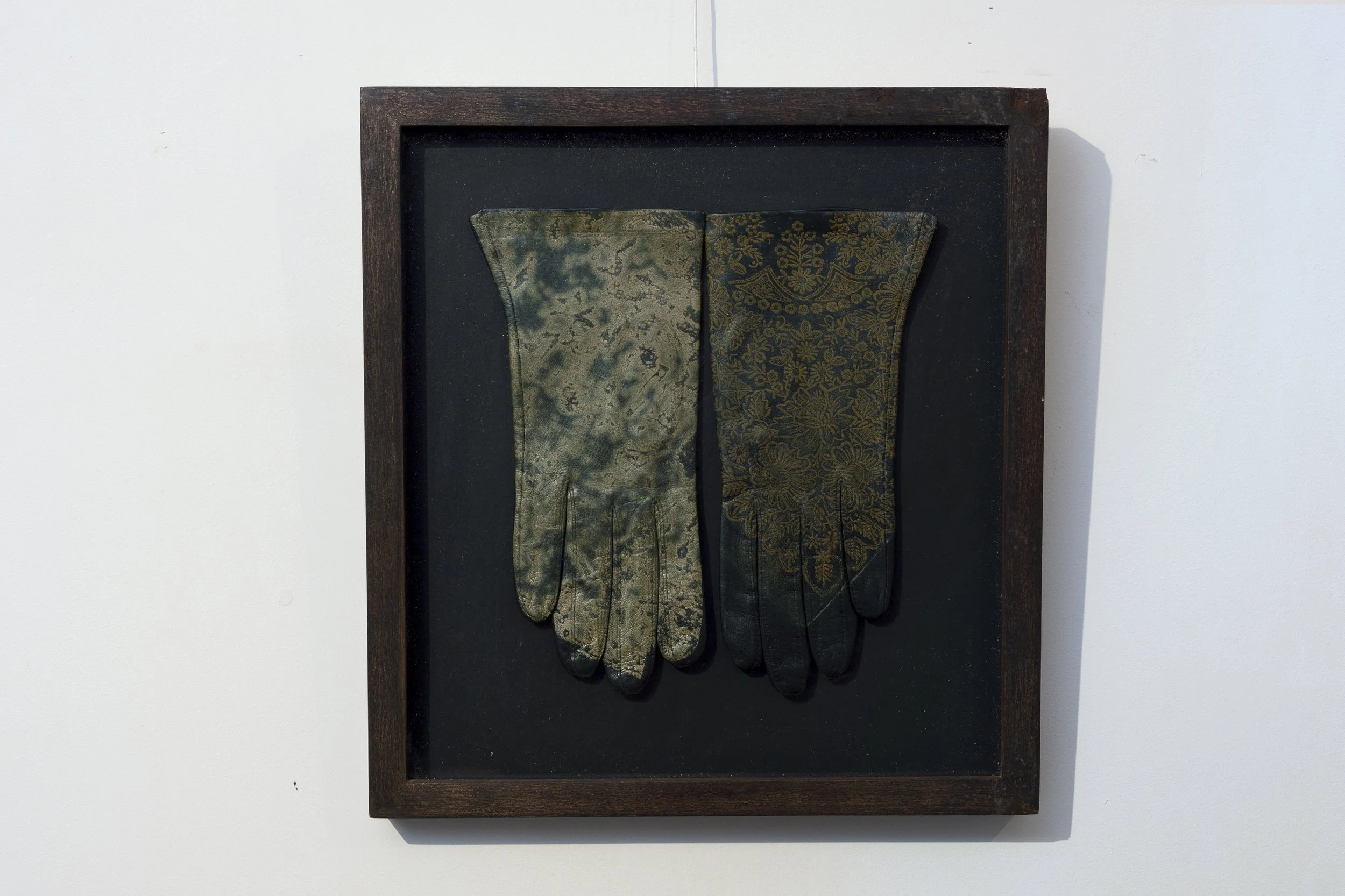
Peace Series
-
![Marine Ky Art – Love /Unity I]()
Love / Unity I
Dimensions : 28,5 x 29 cm
-
![Marine Ky Art – A Changing Phenomenon I]()
Peace: A Changing Phenomenon I
Dimensions : 95 x 94,5 cm
-
![Marine Ky Art – A Changing Phenomenon I]()
Peace: A Changing Phenomenon II
Dimensions : 95 x 94,5 cm


-
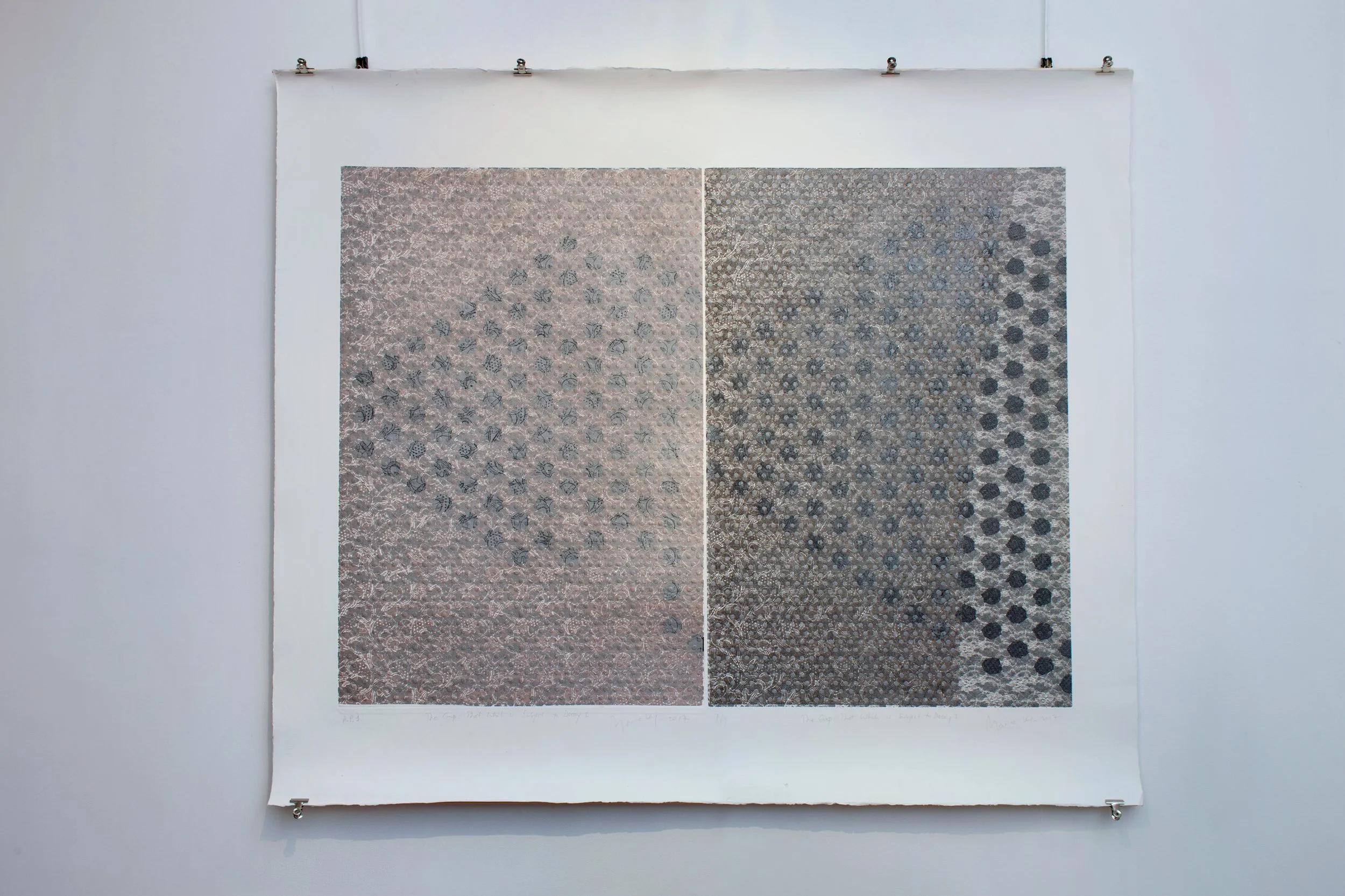
![The Gap : That Which is Subject to Decay I a]()
The Gap : That Which is Subject to Decay I a
Plate dimensions : 90 × 60 cm
-
![The Gap : That Which is Subject to Decay I b]()
The Gap : That Which is Subject to Decay I b
(Details)
-
![The Gap : That Which is Subject to Decay II a]()
The Gap : That Which is Subject to Decay II a
Diptych – Unique state
Combined plate dimensions : 90 x 120 cm
-
![The Gap : That Which is Subject to Decay II b]()
The Gap : That Which is Subject to Decay II b
(Details)
-
![Marine Ky Artwork – Plate I Triptych]()
Plate I
Triptych
-
![Marine Ky Artwork – Plate II Diptych]()
Plate II
Diptych
-
![Marine Ky Artwork – Plate III Diptych]()
Plate III
Diptych




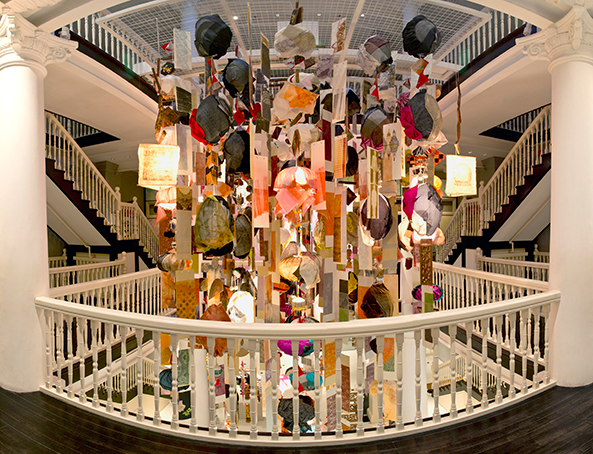
Setting Off is a suspended mixed-media installation composed of hundreds of elements. It brings together etchings on paper and silk, engraving on felt, stitched forms, embroidery and photographic fragments. Lantern-like structures are covered in silk printed from etched plates.
Setting Off
2016
Singapore Biennale, Singapore


Se transcender pour transformer le monde
2013
Centre Culturel Français, Phnom Penh, Cambodia

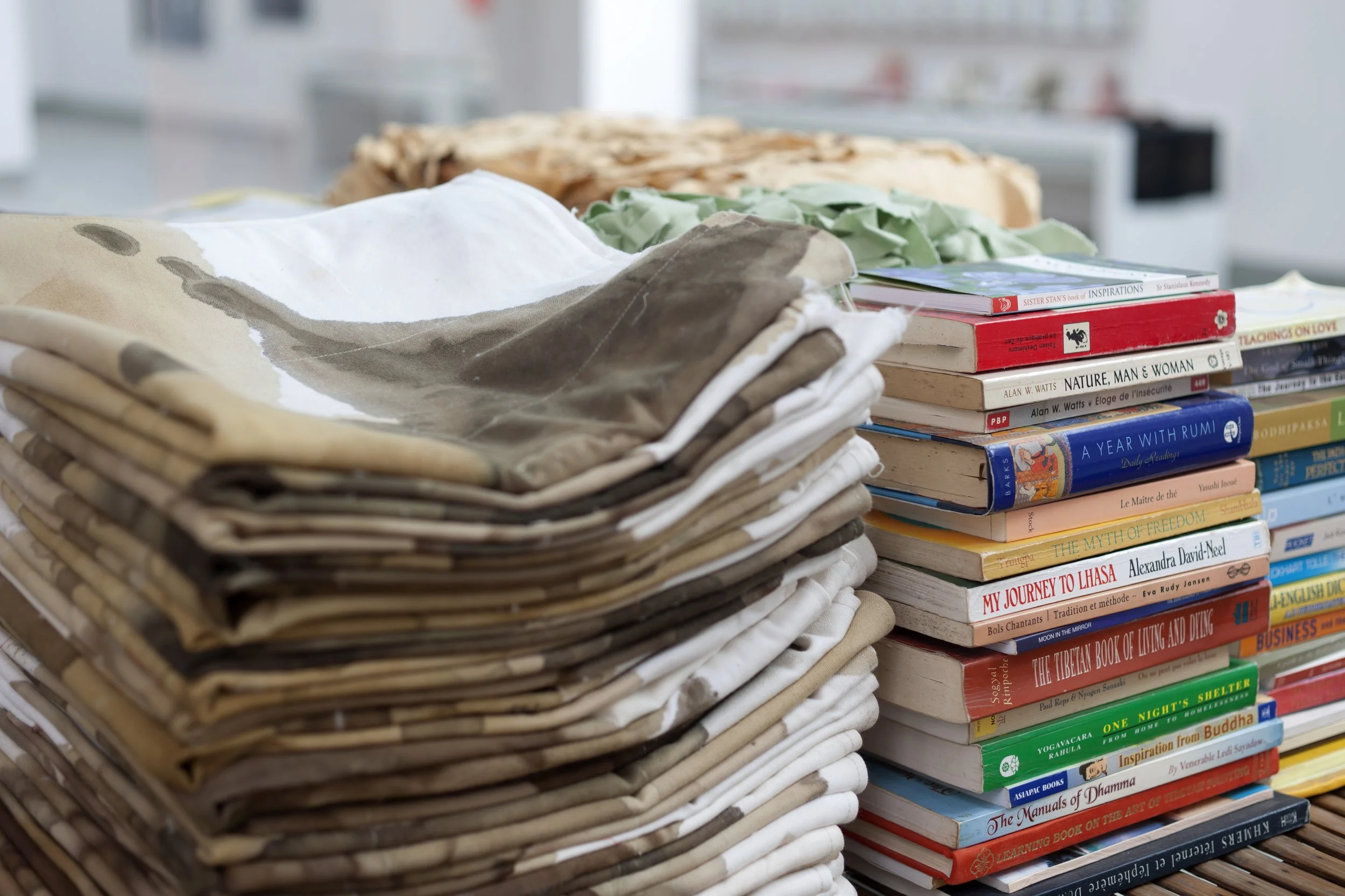
This installation combines works developed through printmaking, textile and repeated imprinting processes.



La Collection La Traversée
Soft-ground etching
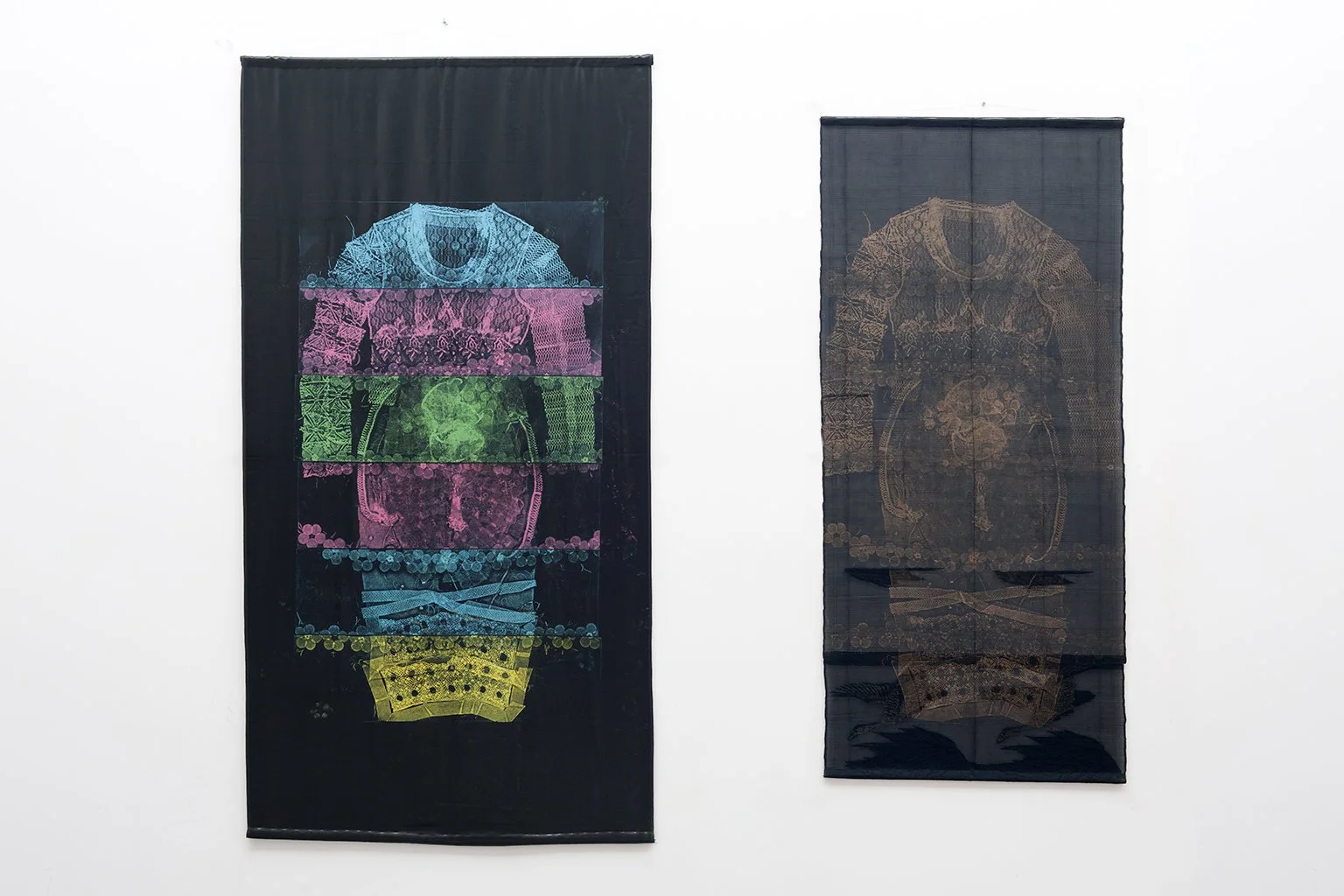
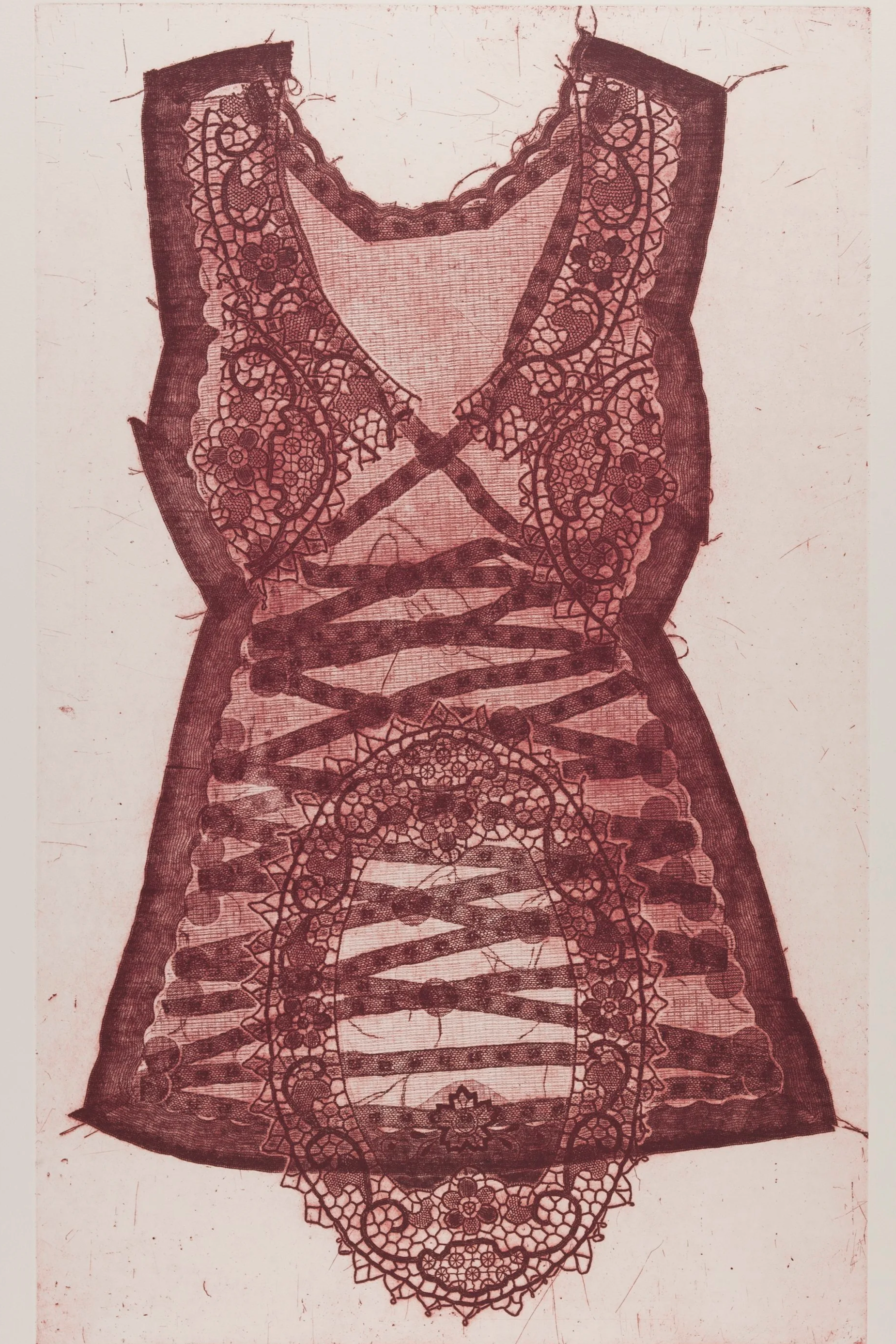
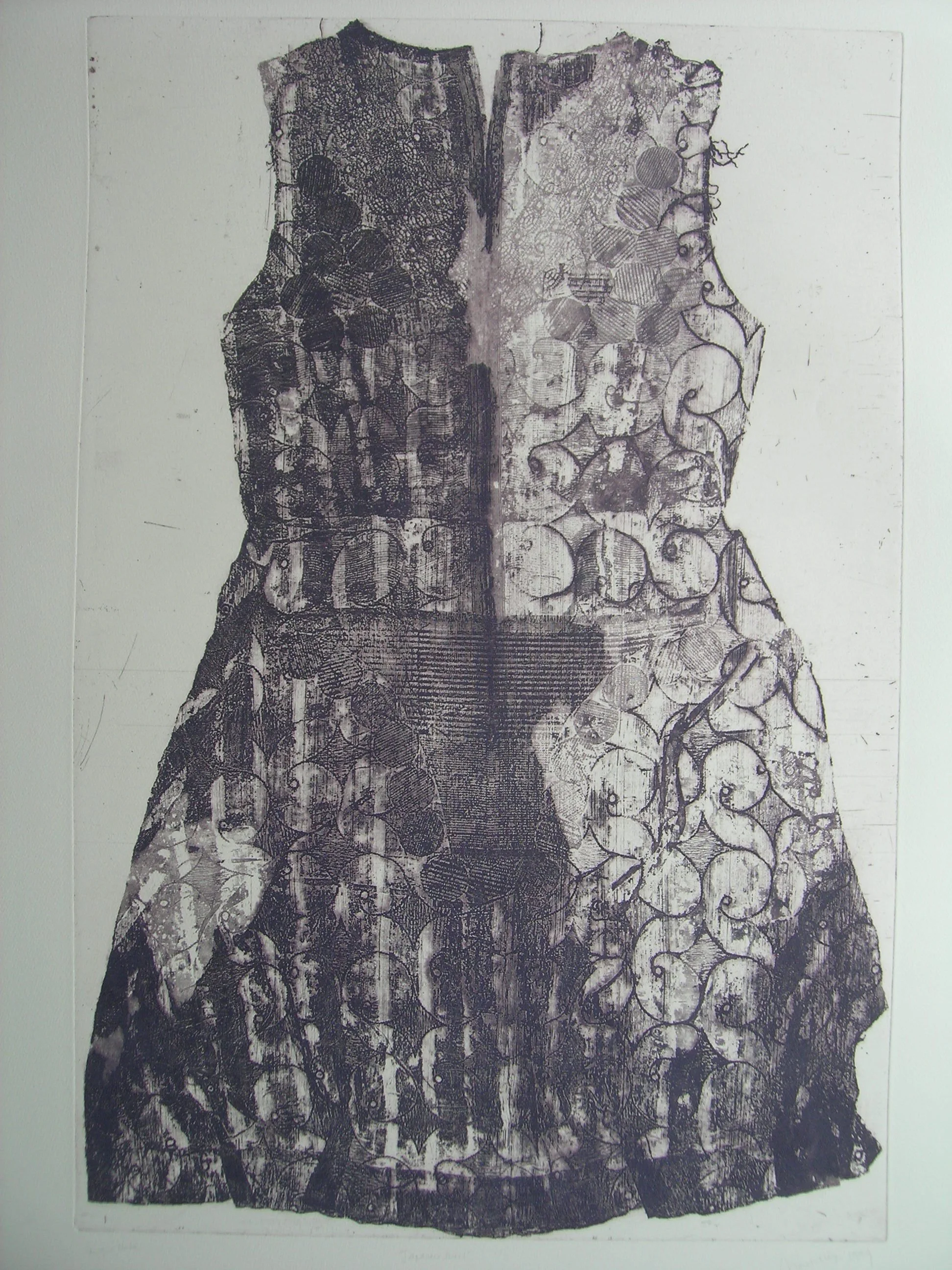
The dresses move between object, imprint and image. Their textures are transferred through soft-ground etching, allowing the same form to shift from strongly material presence to something almost spectral.
Across contexts
Mekong: a work across contexts

Happy Art Home II
2005
Musée de la Soie
2024
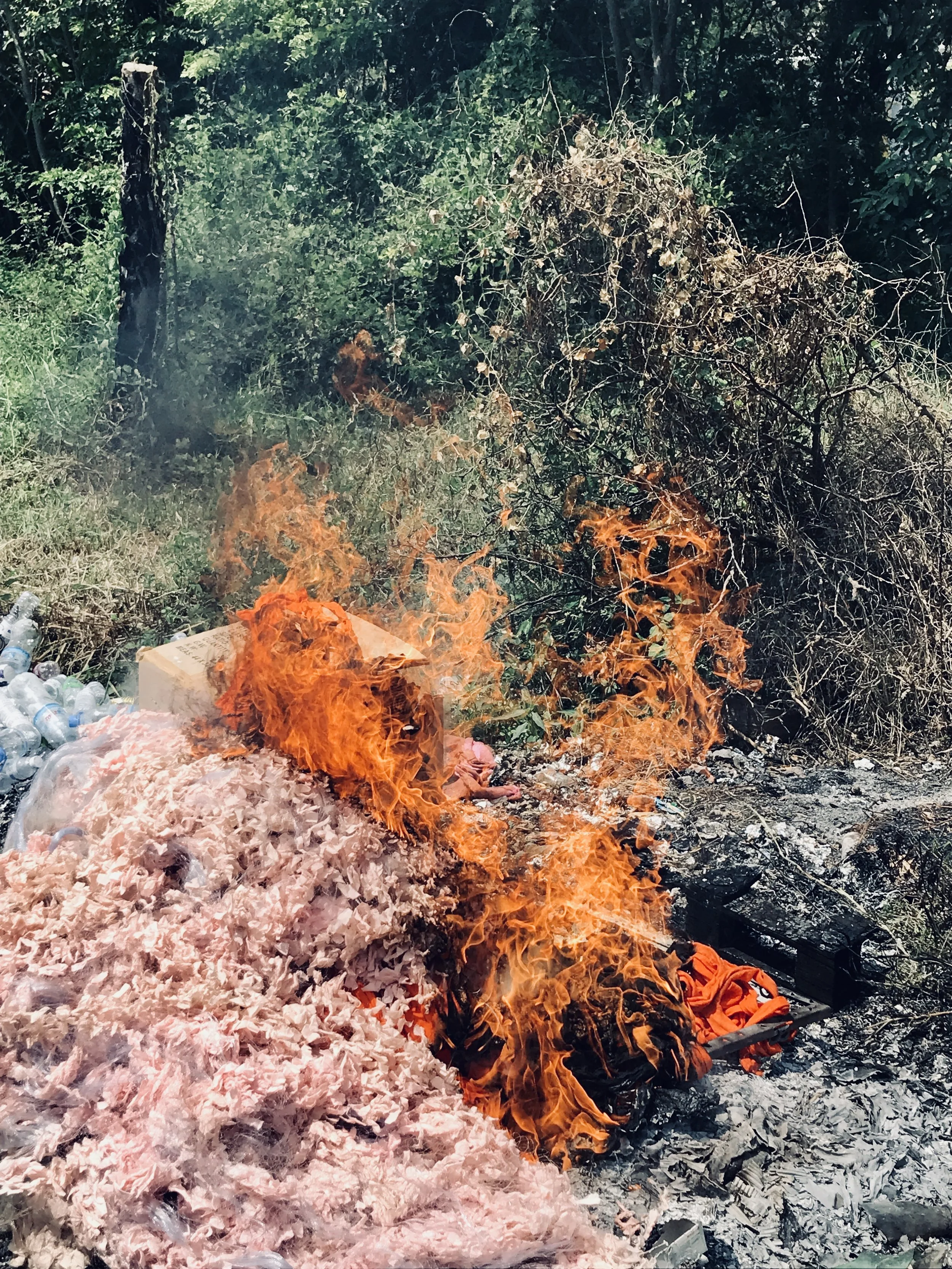
End of cycle
2025
Mekong is shaped through collective making, with hundreds of children contributing materially to its formation. Their participation questions authorship labour and how an artwork comes into being.
At the Musée de la Soie, this collective making meets histories of weaving, embroidery, industrialisation and anonymous labour. Its displacement draws attention to those who decide where and how art is shown, legimised, preserved and stored. The setting also challenges the white cube as the supposedly ultimate space for art.
Its final burning makes those questions irreversible. Who makes, authorises, preserves or ends an artwork? What remains once its material existence is gone?
Robe de bal

Soft-ground etching on black paper
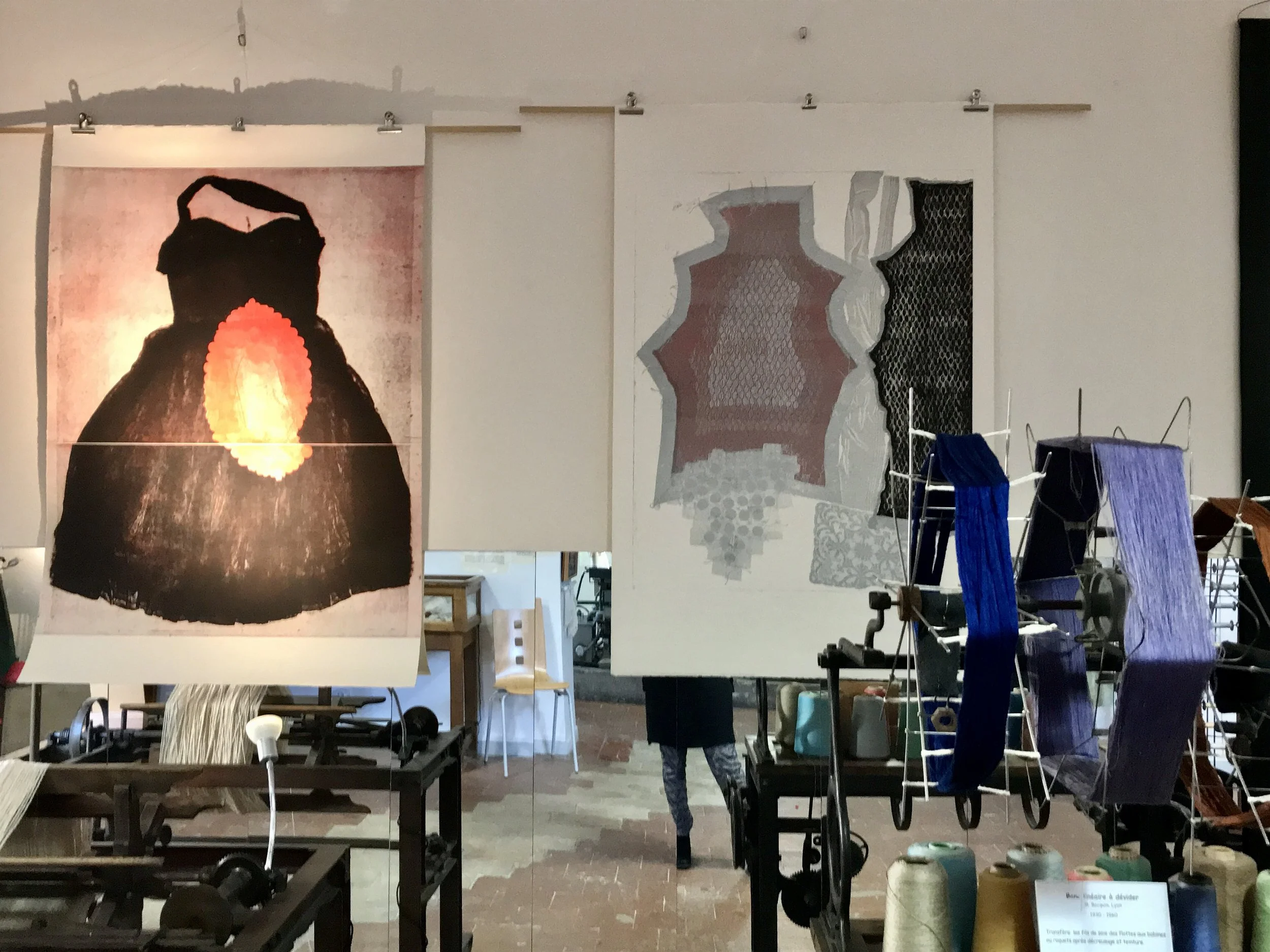
Installation view, Musée de la Soie
2024
Through material, inking and context, these soft-ground etchings shift between tangible presence and apparition.
Optical Screens
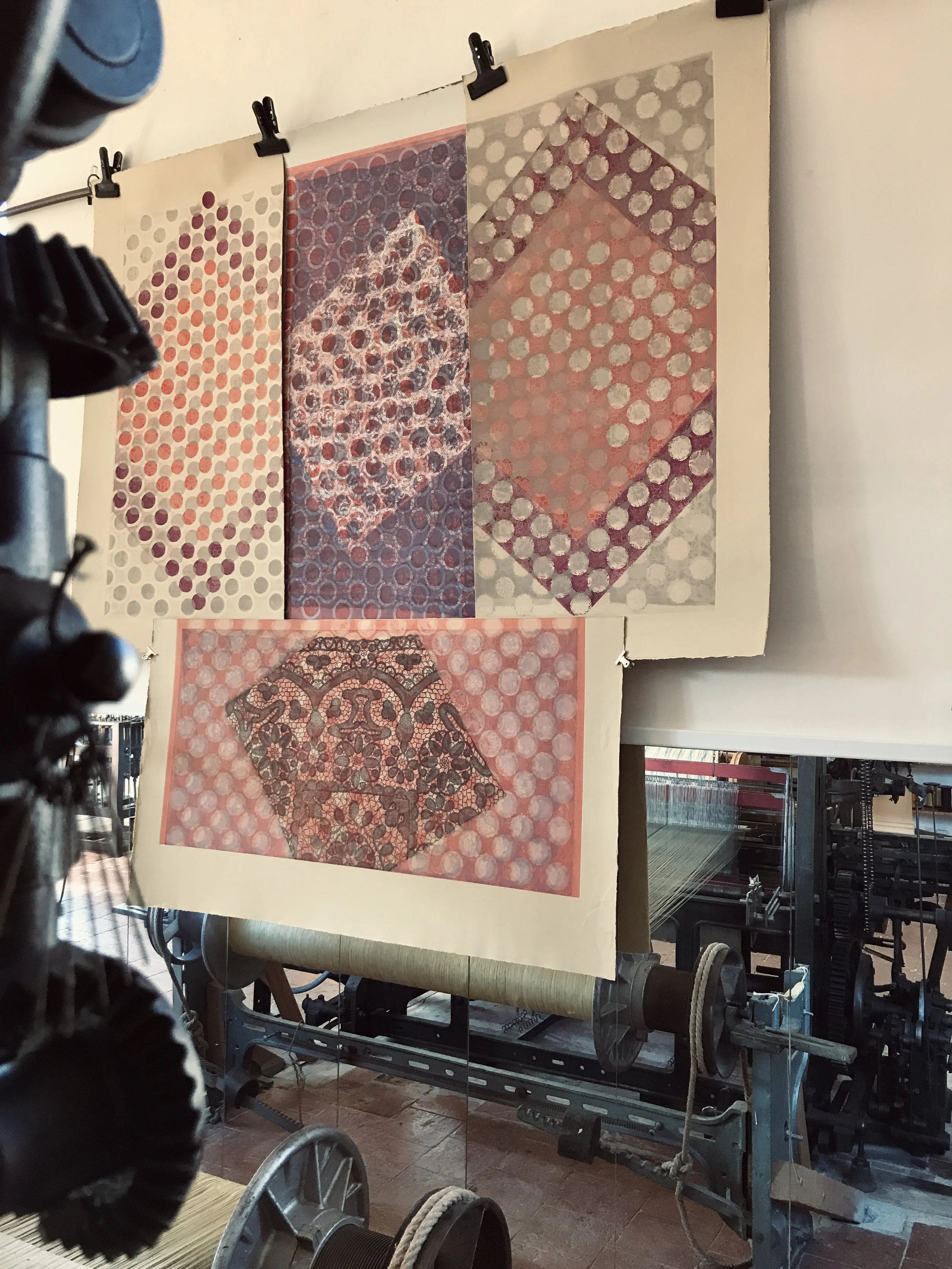
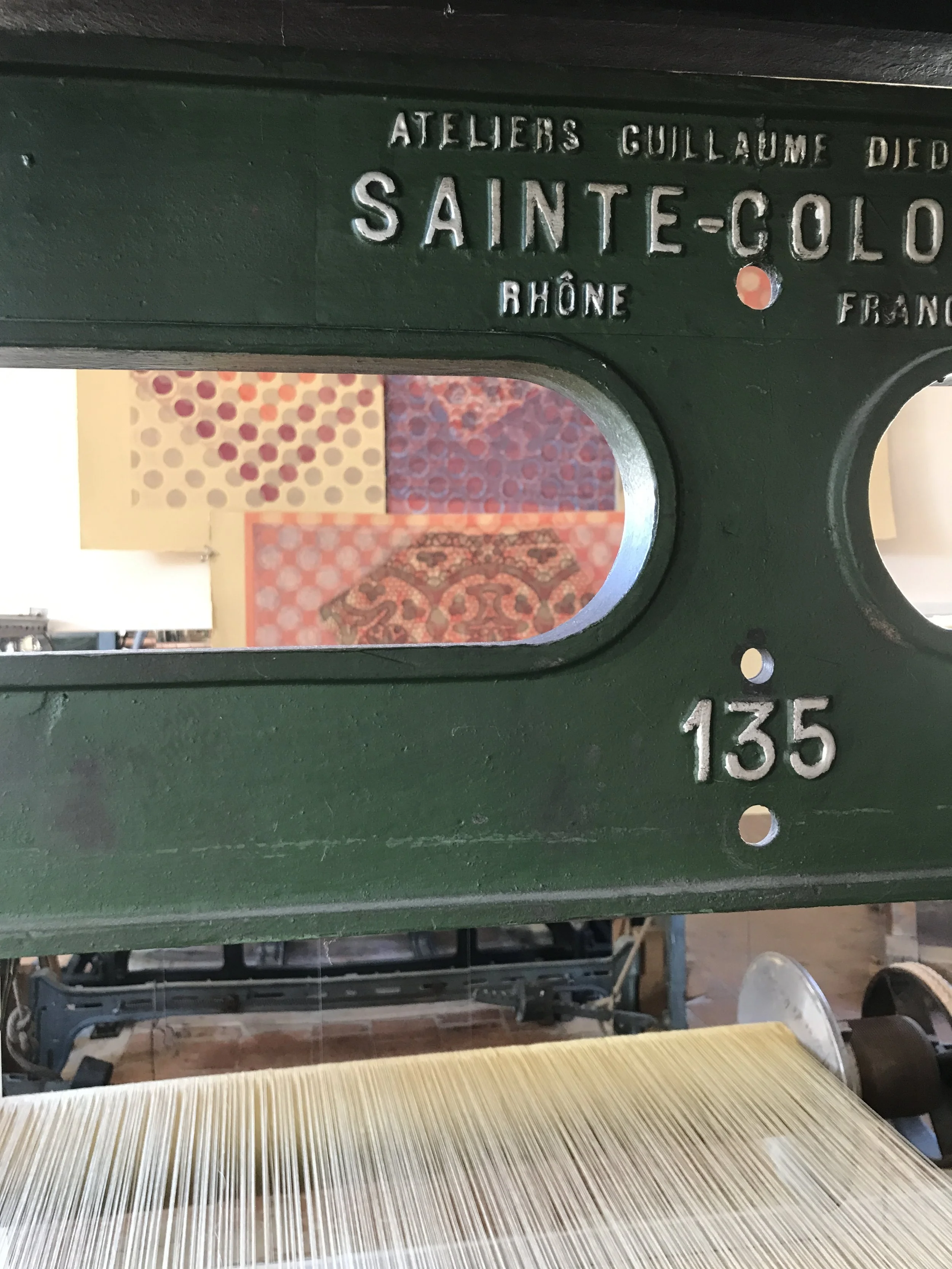
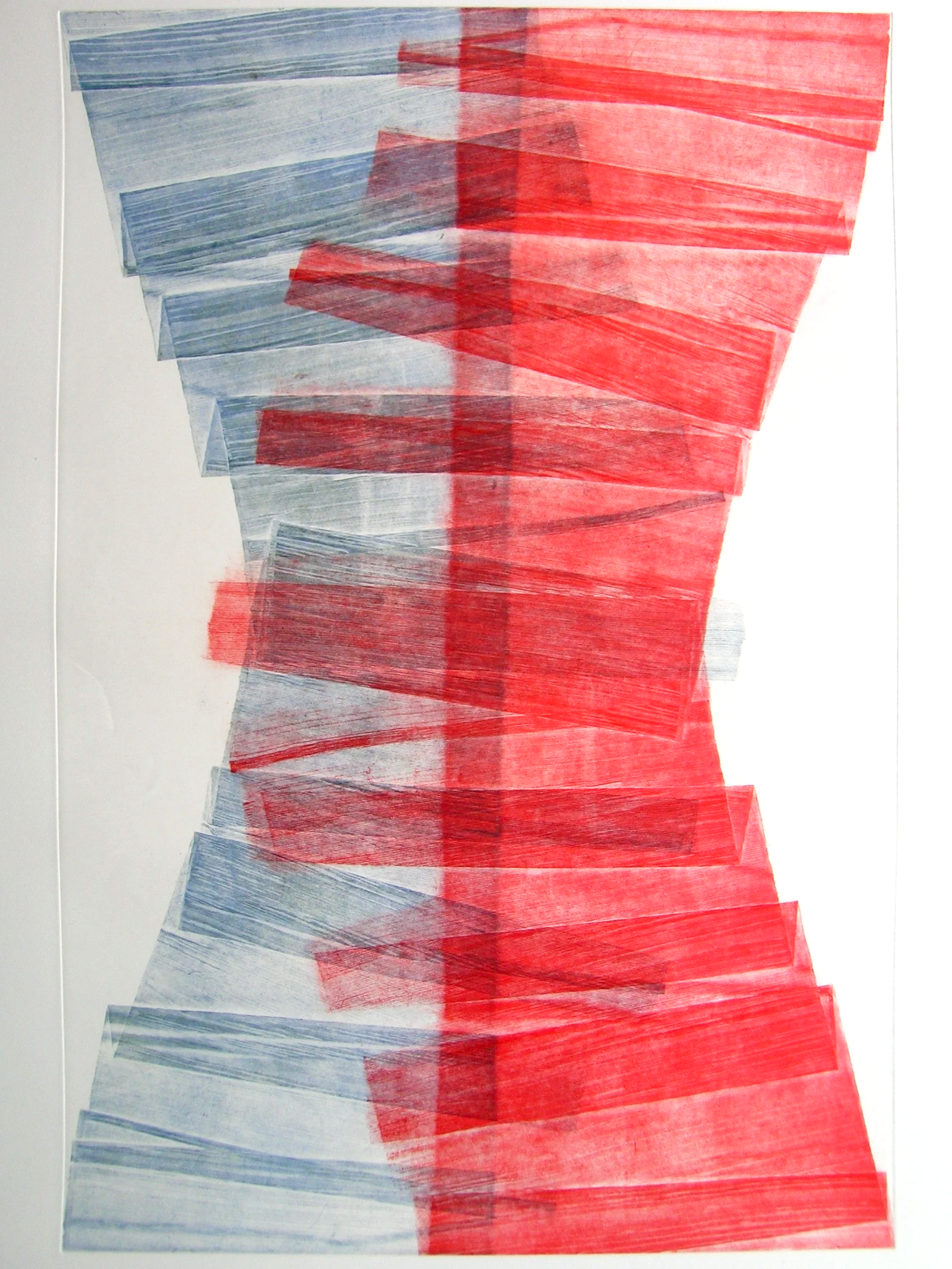
In the Optical Screen series, repeated circles form a permeable layer across earlier images. Superimposition makes some forms visible while obscuring others, shifting the image as the eye moves between its different layers.
These works became preliminary studies for The Gap, where appearance and disappearance would become increasingly dependent on material, light and the viewer’s position.
-
![Marine Ky Art – The Journey – Corset sur papier]()
Corset I
Soft-ground etching on paper
-
![Marine Ky Art – The Journey - Butterfly]()
Papillon
Soft-ground etching on paper
-
![Marine Ky Art – The Journey – Folded Kimono]()
Kimono plié
Soft-ground etching on paper
-
![Marine Ky Art – The Journey – Crochet Dress]()
Robe au crochet
Soft-ground etching on paper
-
![Marine Ky Art – The Journey – Japanese Dress]()
Robe japonaise
Soft-ground etching on paper
-
![Marine Ky Art – The Journey – Lace]()
Dentelle
Soft-ground etching on paper




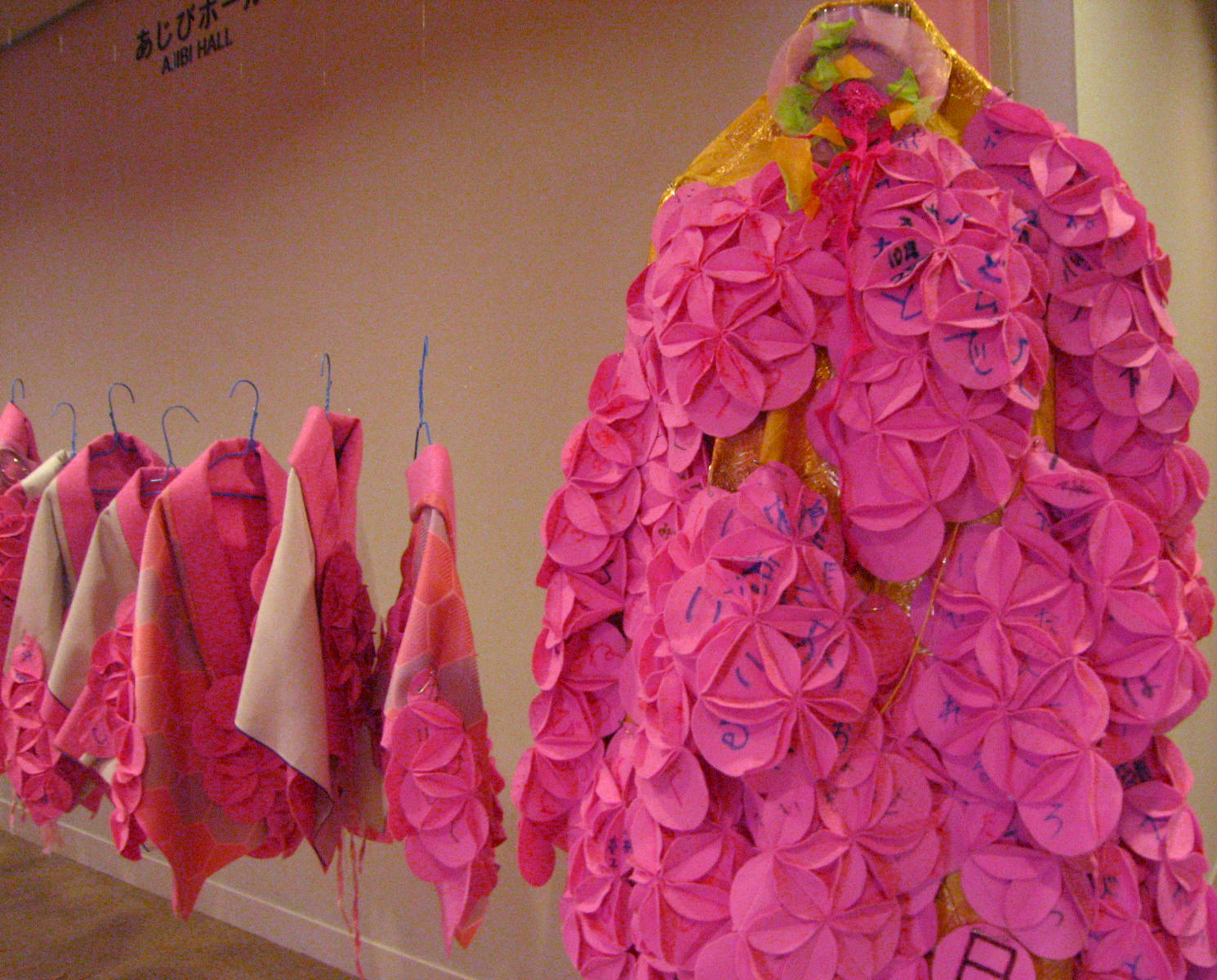
Unlike the first version of Happy Art Home, whose prints were displayed on walls or framed, Happy Art Home II became a space to enter and inhabit. With each new installation, more prints were made and added. Dozens became hundreds, gradually expanding the work.
By Installation IV, it occupied 16 square metres and comprised hundreds of mandalas printed by hand from copper plates onto wool felt. The installation also hosted art and poetry workshops for children, tea gatherings and haiku sessions.
2005-06
Fukuoka Triennale of Asian Contemporary Art, Fukuoka Asian Art | Fukuoka | Japan
Blackburn Museum & Art Gallery | United Kingdom
Happy Art Home II / Installation IV
-
![Marine Ky Artwork – Haiku Flowers 01]()
Haïku Flowers
-
![Marine Ky Art – Haiku workshop with Utsumi-san]()
Haiku workshop with Utsumi-san
-
![Marine Ky Art – Mapping Connections — Workshop with Children]()
Mapping Connections — Workshop with Children
-
![Marine Ky Art -In a Kimono with a Friend]()
In a Kimono with a Friend
-
![Marine Ky Art – Happy Art Home]()
Happy Art Home


2004

Mandalas printed on Khmer organza and Japanese silk, Thai handmade paper, Japanese washi and other supports are brought together with textiles and fragments developed through children’s workshops across Australia, Southeast Asia and Japan.
Some of these fragments carry the marks of several children, made at different times and places.
In Aomori, local participants contributed through sewing, using fragments of fabric while reflecting on events of the Second World War, adding another layer to the evolving work.

Aomori Contemporary Art Centre | Aomori | Japan
Happy Art Home I / Installation III
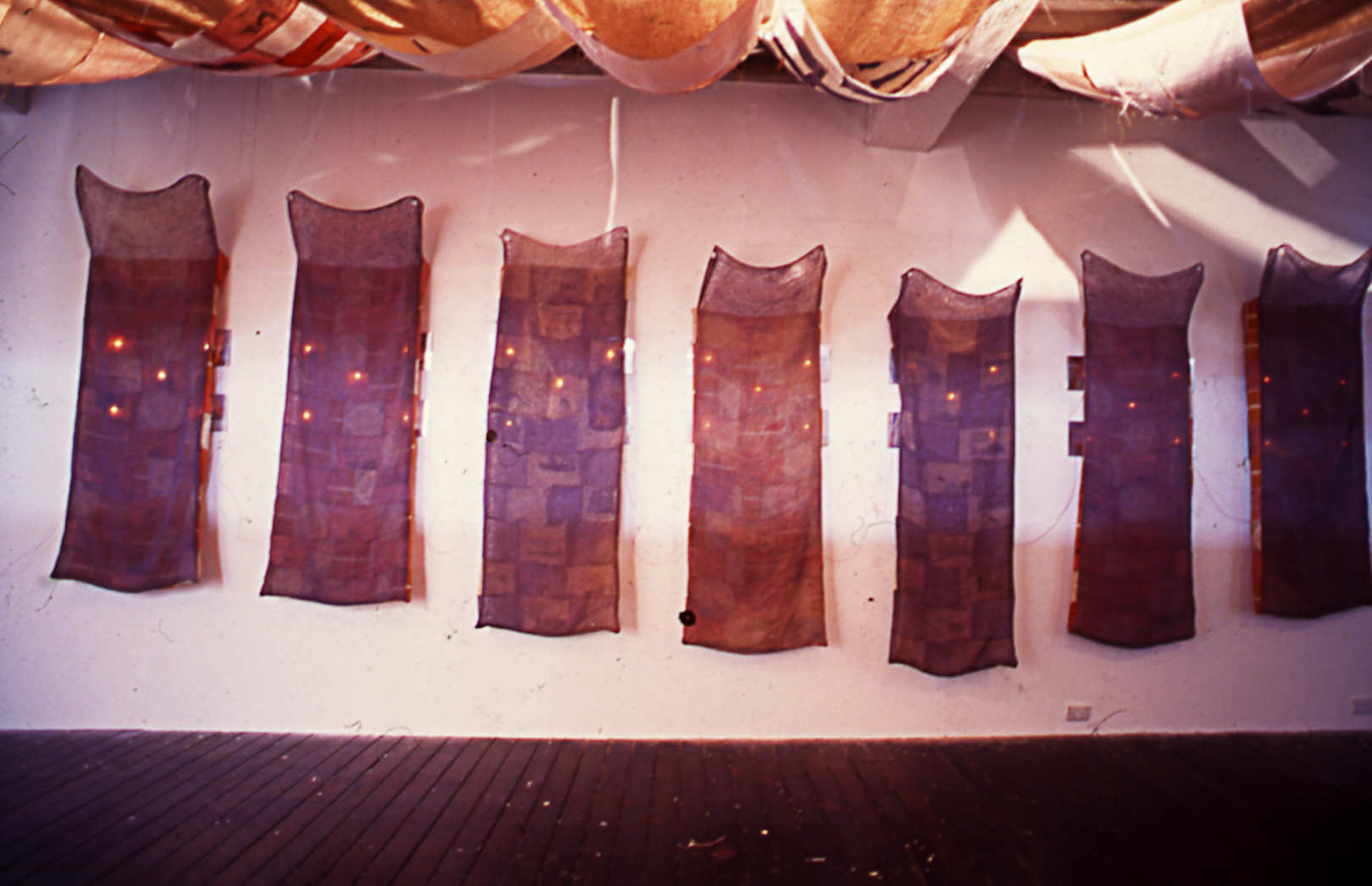
Archival portraits from Tuol Sleng were repeatedly transferred, from digital files through photocopy and fine used silk onto acid-free printmaking paper. Through these successive transfers, the faces became fragmented and distorted, acquiring an eerie, unsettling presence.
Many of those photographed remained unidentified; the attempt to recover their identities sits against images that seem to appear and disappear before the eye.
The complete series was subsequently lost during a house move and now survives through documentation.
2000
Pray/Prey | 4A Centre for Contemporary Asian Art | Sydney | Australia
-
![Marine Ky Artwork – Tuol Sleng 02]()
Tuol Sleng 02
-
![Marine Ky Artwork – Tuol Sleng 20]()
Tuol Sleng 20
-
![]()
Tuol Sleng 07
-
![Marine Ky Artwork – Tuol Sleng 14]()
Tuol Sleng 14
-
![Marine Ky Artwork – Tuol Sleng 17]()
Tuol Sleng 17